 Pre-development brand strategy
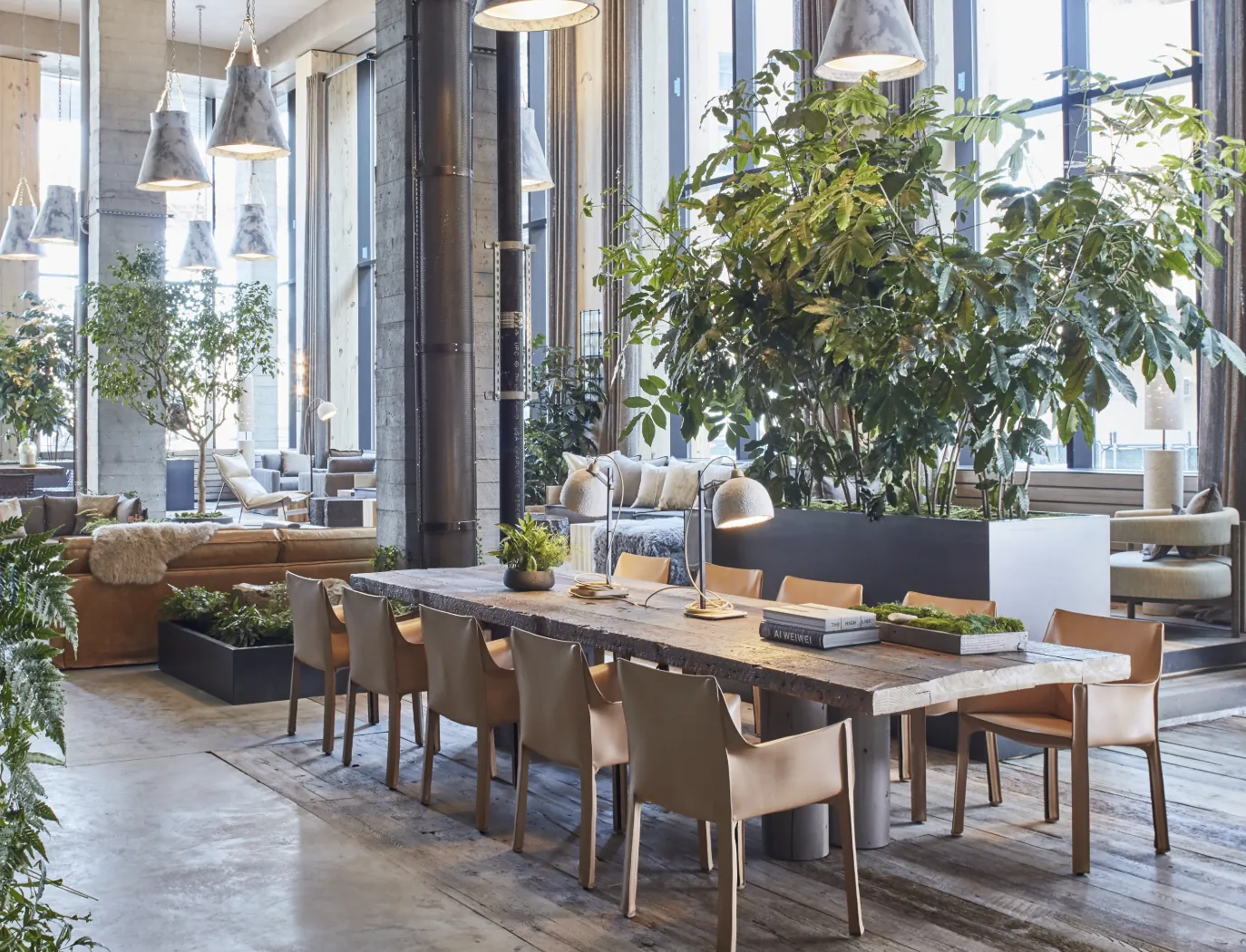
Some of the furniture at 1 Hotel Brooklyn Bridge began life upriver. Brooklyn studio Uhuru Design turned beams from the old Domino Sugar Factory into tables for the hotel’s common areas. Bien Hecho, another local workshop, made tables from New York trees brought down by Hurricane Sandy. Sit down for a coffee and you can put your hand on a piece of the borough’s history.
At 1 Hotel Tokyo, the design team used Oya stone from Tochigi on the façade, in the elevator vestibules and on the arrival lobby wall. Scaffolding boards from the construction site were reused as moss installations in the guest rooms. The two hotels share a philosophy about nature and reuse. Each expresses it through materials and craft specific to where it stands.
After more than two decades helping developers tell stories about buildings, I’ve found that the best stories often start with a decision made long before there’s anything to photograph. Someone decided what to keep. Someone made room in the budget for a local workshop. Someone wrote a brief for a lobby that would give the neighbors a reason to come back on a Tuesday.
That’s where a brand story can earn its keep. If the brief says the project will feel rooted in its neighborhood, ask the design team what it can retain or reuse. Ask the leasing team what people nearby already leave the neighborhood to buy. Then give someone responsibility for pricing the idea and carrying it into the plans. A small decision made early can give a place a story people can discover for themselves.
At your next design review, ask one question while there’s still time to change the drawings.
What have we decided to do here that we’d do differently two ZIP codes away?